About exhibition
The exhibition “Uneven Geographies” by the artistic group diSTRUKTURA, consisting of Milica Milićević and Milan Bosnić, presents their latest body of work within the project “Possibility of the Sublime.” Through the use of various media—painting, photography, video, and drawing—characteristic of their previous practice and suitable for research and reflection, the artists openly address issues of ecology and economy, which they observe through the intertwined relationships between landscape, community, and power.
The recognition of clearly visible changes in nature includes the position of the human being, simultaneously as participant and observer, addressing complex questions of nature, technology, and contemporary society, without excluding the past and with an open inquiry into the future.
The exhibition is realized in collaboration with the Gallery of Contemporary Fine Arts in Niš, the Art Gallery “Nadežda Petrović” in Čačak, the Art Gallery of the National Museum in Kruševac, the Student Cultural Center Novi Sad, and DOTS Gallery in Belgrade. The catalogue, published by the aforementioned institutions along with ProArtOrg from Belgrade, will bring together the installations of five exhibitions. The project curator and author of the catalogue text is Sanja Kojić Mladenov, PhD.
About the Artists
Milica Milićević and Milan Bosnić (diSTRUKTURA) completed their undergraduate and master’s studies at the Faculty of Fine Arts in Belgrade, Department of Painting. Since 2005, they have worked together as the artistic duo diSTRUKTURA, under which name they have participated in over 30 solo and more than 70 group exhibitions in Serbia, Slovenia, North Macedonia, Romania, France, Italy, Austria, Germany, the Netherlands, Luxembourg, Switzerland, Japan, Slovakia, the Czech Republic, Montenegro, Croatia, Hungary, Finland, and Egypt.
diSTRUKTURA has taken part in artist residency programs and workshops in Spain, Switzerland, Germany, Austria, the Netherlands, Slovenia, Italy, Finland, Egypt, and Serbia. They are recipients of numerous awards and grants, including the Pollock-Krasner Grant in 2015. Their works are included in over 15 public and private collections.
distruktura.com
Possibility of the Sublime
Sanja Kojić Mladenov, PhD
diSTRUKTURA has been actively engaged with the themes of ecology and economy throughout their entire artistic practice. In their latest series of works, developed within the project "Possibility of the Sublime", they continue to examine the landscape as an indicator of complex social and economic transformations caused by neoliberal, colonial, and peripheral policies. The artists explore sites on the margins of neoliberal growth—“spaces where global capitalist logic is most intensely inscribed into nature and human lives.” They consider expanded notions of nature within a post-industrial, post-technological, and post-digital environment of a transitional society.
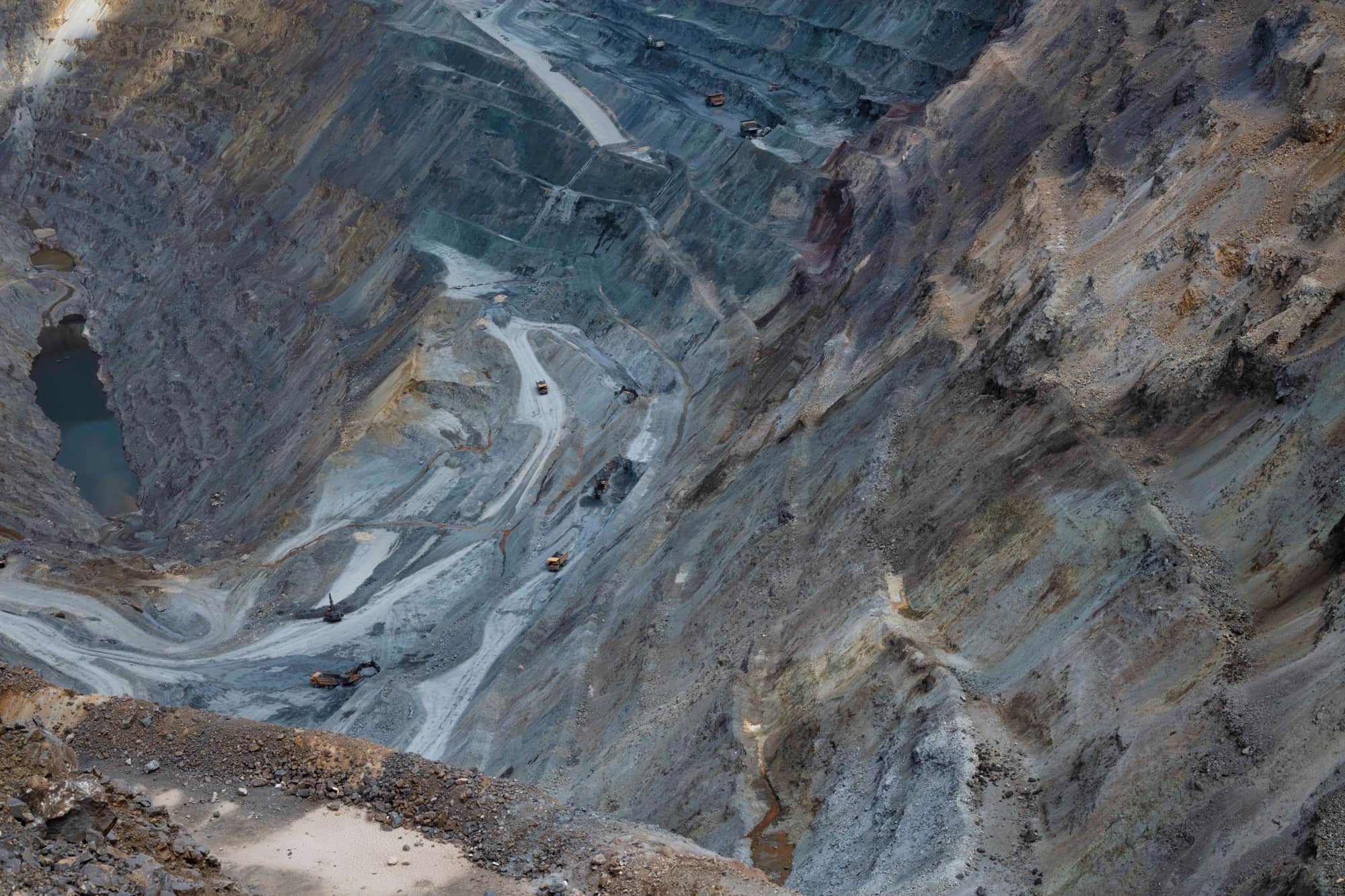
For their research study, they follow the changes in the landscape of the mining town of Majdanpek, located on the edge of eastern Serbia, and its emblematic mountain Starica, whose mining and exploitation are carried out by the Chinese company Zijin Mining. Changes in the natural environment are undeniably visible. The site of the mining pit today is, on one side, a vast crater, and on the other, a hill slowly disappearing due to intensive blasting, soil fragmentation, and preventive demolition. The devastation of the natural landscape caused by the exploitation of natural resources is not merely a question of physical reality, but the result of complex interrelations among various policies, interests, economic and technological demands, as well as issues of unstable, layered identities and the social and emotional ties of the local population.
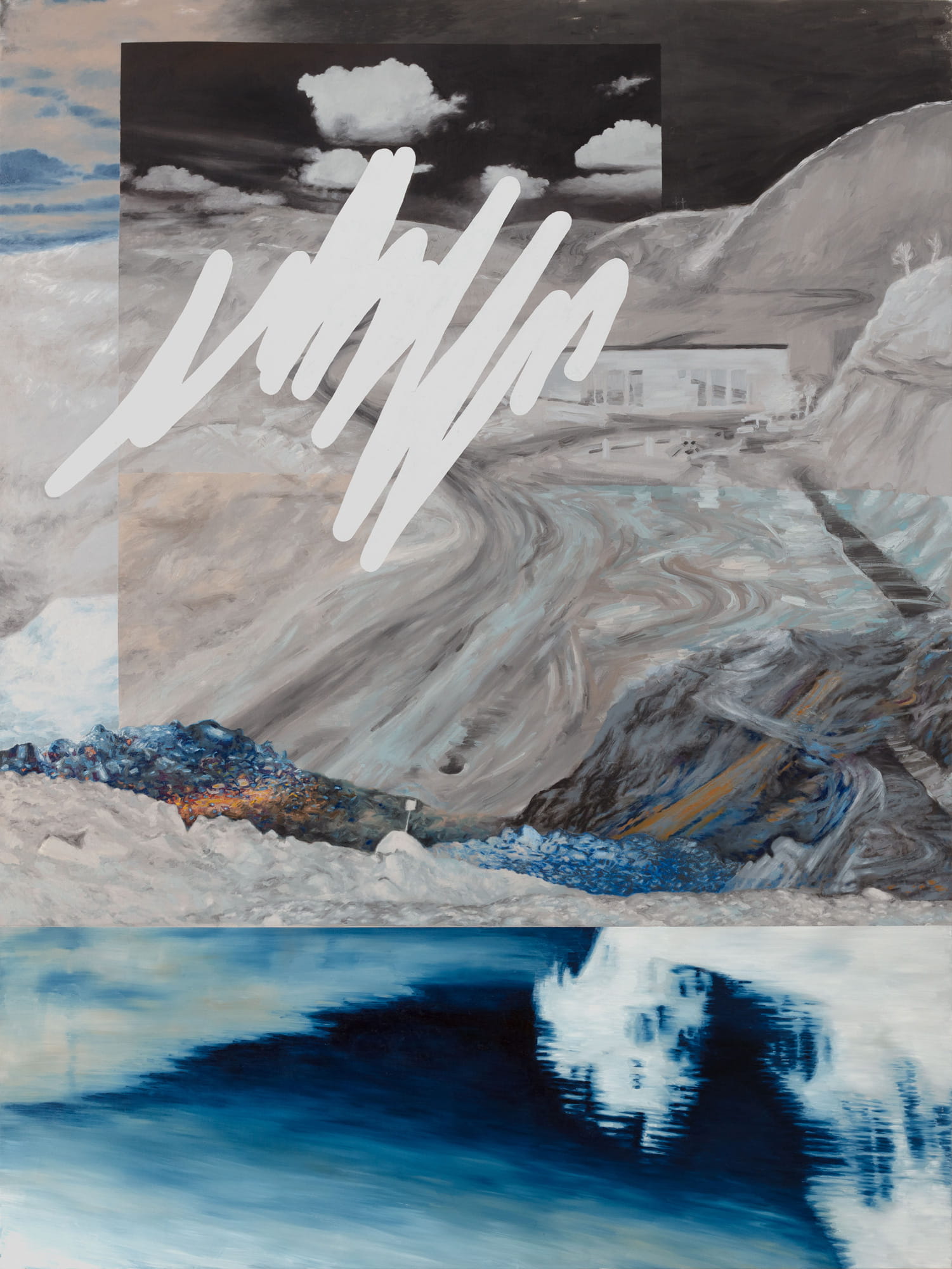
The artists ask whether what we see can still be considered sublime, referring to Burke’s and Baumgarten’s understanding of the Sublime as an aesthetic-philosophical discourse based on “a fusion of awe, terror, and admiration.” To what extent does the motif of a realistic mountain landscape, “broken” through a process of digital erasure within the painterly procedure, lose its original characteristics? Does the artistic concept, developed through a fragmented painterly image, leave visible traces of the original natural environment that is slowly dying as a result of human activity? Or does the sublime landscape, through a process of deconstruction, become a place where aesthetic quality merges with the ethical? The landscape may remain a field in which the initial image is expanded through various narratives, such as “destructive and astonishing, wild and instrumentalized,” as the artists state.
diSTRUKTURA analyzes the position of the landscape and its social perception, emphasizing the shifting and intertwined relationships between people, nature, and society. They highlight humanity’s drive to dominate nature and natural resources and to use them for capital accumulation, involving various geopolitical and local interests, as well as the dependency of semi-peripheries on dominant centers. They point to the relationship with the past embodied in the accumulation of untreated waste and the use of outdated technologies for energy production. This results in pollution and the degradation of the natural environment—tendencies present in Serbia due to economic and political conditions. At the same time, the artists emphasize the absence of a positive vision of the future, as the prospect of progress—rooted in profit, resources, and manufactured goods—is unfortunately displaced from the periphery and accumulated in neoliberal capitalist centers.
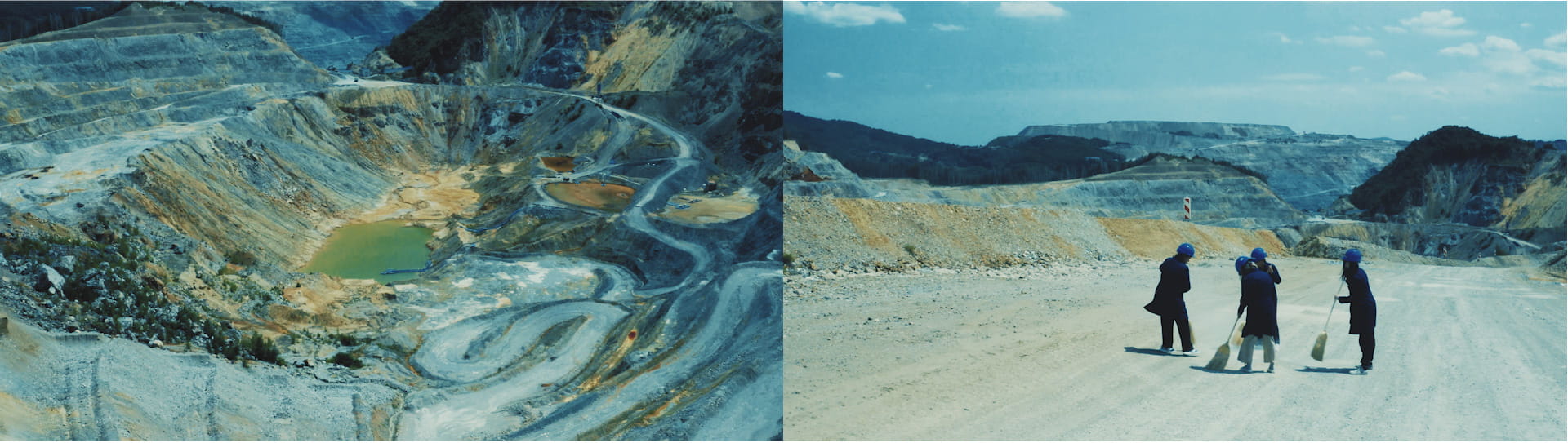
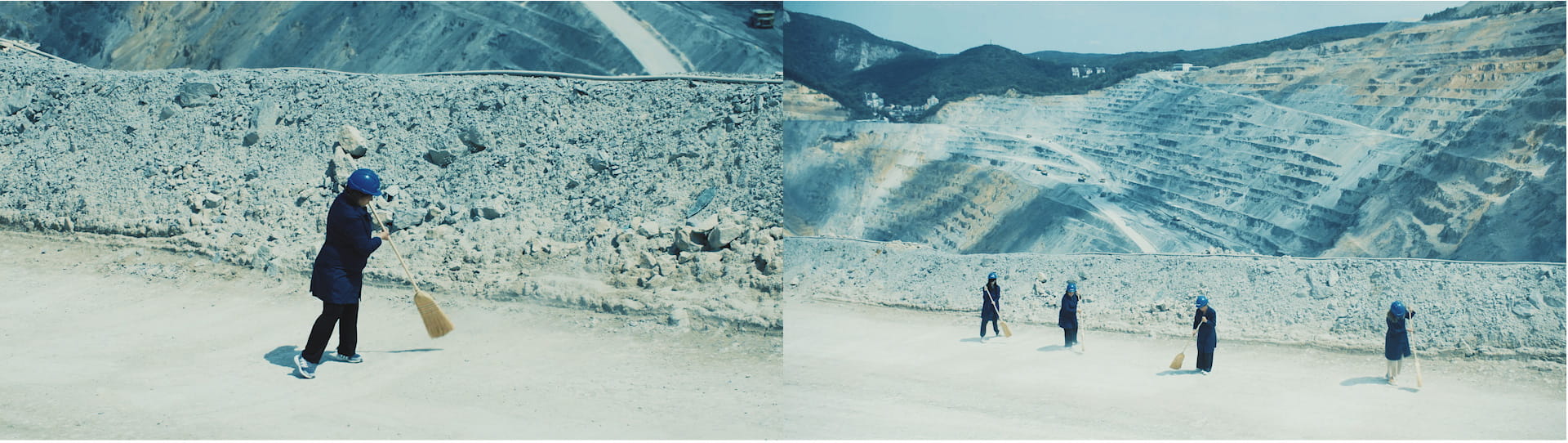
The examination of gender aspects and socio-economic power is also present within these unequal and discriminatory strategies. diSTRUKTURA dedicates a specific segment of the project to former workers of the well-known “Zlatara Majdanpek,” whose life stories become part of constructing the Sublime landscape. They consider the marginalized position of women in industry, in the process of transforming natural wealth into capital, as well as their inability to influence decisions that led to the collapse of production and loss of jobs. Through a video performance of cleaning the earth within the mining pit itself, the workers metaphorically and literally attempt to mark and reclaim a space that has been taken from them, while also pointing to the importance of healing and progress. From ancient mythology onward, through various depictions of violence and war, women have often been assigned the symbolic role of cleaning up the “mess” left by men, preparing the ground for future generations.
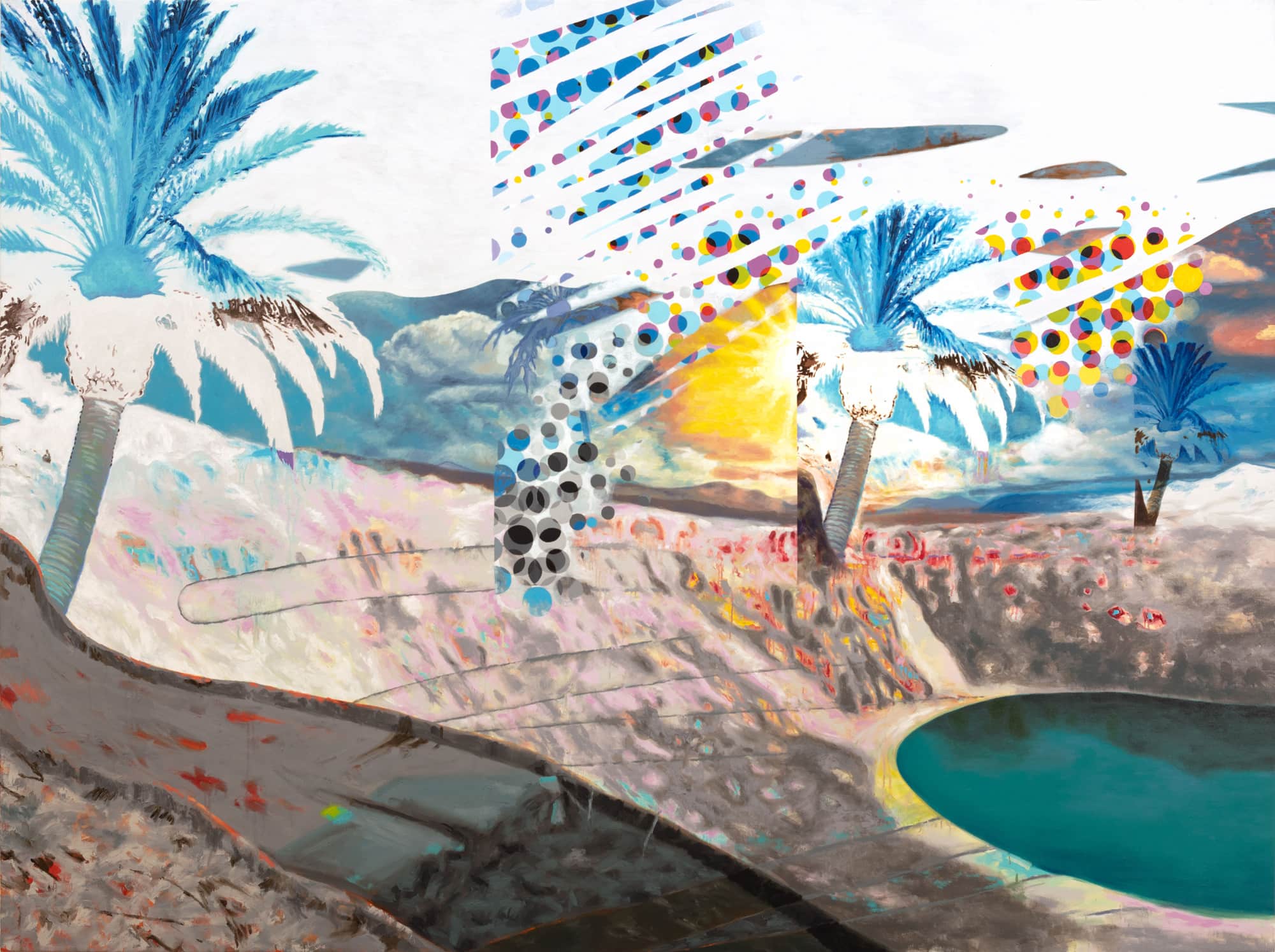
The artists further examine imagined futures by collecting visions from local residents. These narrative units are used as prompts for engaging artificial intelligence in the creation of images of a reclaimed landscape that could be shaped by the “will of the community.” The sublime landscape, realized as oil on canvas, thus acquires futuristic, coastal, and exotic elements that point to the possibility of revitalizing terrain exhausted by mining, while also indicating the lack of political will to enact change. They argue that there are no guarantees that the revitalization of mining areas will be carried out, as such plans most often remain at the level of local aspirations. Through the project "Possibility of the Sublime", the artists call for imagination as a form of resistance to a disrupted reality, and ultimately as a means of reclaiming control over one’s own future—an artistic call to address current problems rather than ignore them.